The Number Doesn't Know the View: Handling an Appraisal Gap on a Spillway Bridge Lake House
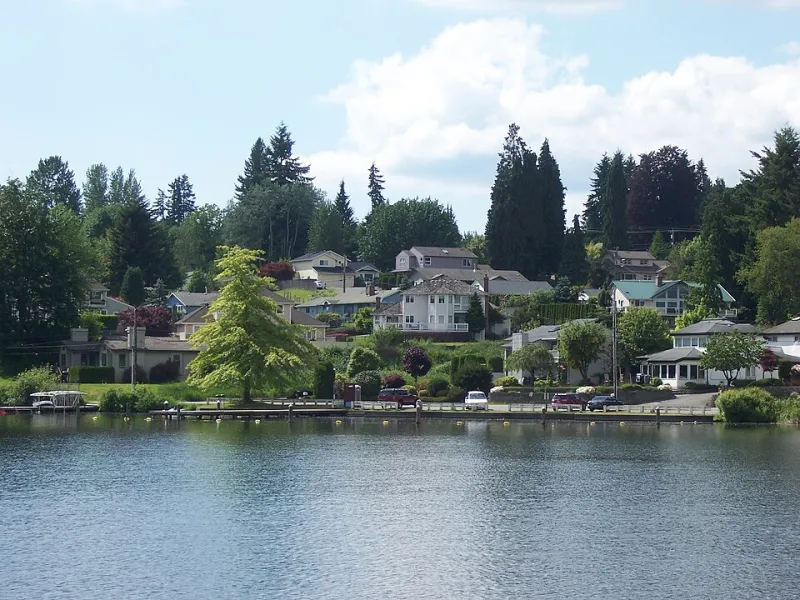
Photo: ECTran71, CC0, via Wikimedia Commons
Ask anyone who has bought or sold a lake house around Spillway Bridge, and you will hear a version of the same story: the contract looks solid, the buyer loves the dock, the seller has started packing, and then the appraisal comes back low. Not low because the house is falling down, but low because the bank's number does not seem to know the water is there.
That is the appraisal gap, and at the lake it shows up more often than it does in a subdivision. The reasons are part math, part paperwork, and part the simple fact that a view does not fit neatly into a square-foot grid. Here is what is actually happening and how buyers and sellers can keep a good deal from slipping away.
Why the Water Does Not Show Up in the Square Footage
A standard appraisal is built to answer one question for the lender: if this loan goes bad, what could we sell the house for? Appraisers lean on recent sales of similar homes, adjust for differences, and arrive at a defensible number. In a neighborhood of nearly identical ranches, that works fine.
At Spillway Bridge, the homes are not identical. One house has a covered dock with a boat lift; the next has a shoreline permit but no dock. One sits on a point with long water views; another backs up to a cove that dries out in late summer. Even two houses on the same road can have wildly different access, setbacks, and shoreline rights. To an appraiser working from a desk in another county, those differences can look like footnotes. To a buyer, they are the whole reason for the price.
The Comps Problem
The biggest driver of a low appraisal at the lake is a thin comp pool. Lenders want sales that are recent, nearby, and similar. On a small lake, recent waterfront sales might be three or four in the past year, and two of those could be tear-downs or family transfers. If the appraiser has to reach across the lake or back several seasons to find comparable sales, the number can drift.
There is also the water-access distinction. A house with deeded dock rights is not the same as a house with a water view and a community ramp. If the appraisal lumps them together, the value can come in shy of what the market has been paying. That is not necessarily an appraiser being careless. It is often a data problem, and data problems can be solved with documents.
What Sellers Can Do Before the Appraiser Arrives
Sellers who know their property's value story do better than sellers who assume the appraiser will just see it. Before the appraisal, put together a simple package and leave it on the kitchen counter. Include a copy of the dock permit or shoreline lease, a plat or survey showing the waterfront boundary, and any HOA or community documents that explain shared access. Add a one-page list of recent improvements with dates and costs, especially anything that affects the water: new dock, seawall repair, riprap, boat lift, shoreline stabilization.
If you have legitimate comparable sales, include them. Not Zillow screenshots, but actual listing and closing data if you can get it from your agent. Point out the differences that matter: water frontage, dock type, view, and whether the sale was arm's length. The goal is not to argue with the appraiser. It is to make sure they have the facts that a local buyer already knows.
What Buyers Can Do When the Number Comes in Low
A low appraisal is not a rejection. It is a negotiation point. The first step is to read the report and see what the appraiser missed. Sometimes it is a simple error: wrong bed count, missing dock, or a comp that is not actually waterfront. In that case, your lender can request a reconsideration of value with supporting documents. That process is not a guarantee, but it is worth doing when the facts are clear.
If the number holds, you have options. You can ask the seller to reduce the price to the appraised value. You can split the difference. You can bring more cash to closing to cover the gap. Or you can walk away if your contract has an appraisal contingency. None of these are fun conversations, but they are normal ones at the lake. The key is to decide before the appraisal comes in which options you can live with.
Keeping the Deal Alive
The best defense against an appraisal gap is preparation on both sides. Sellers should document the water. Buyers should understand that lake value is often carried by things the bank cannot measure in a hurry. And agents on both sides should talk early about what happens if the number comes in low. A deal that survives a low appraisal is usually one where nobody treated the appraisal as a surprise.
At Spillway Bridge, the water is the point. The appraisal is just a checkpoint. Treat it like a conversation, not a verdict, and you have a much better chance of keeping the keys moving.