Uploads, Outages, and the View: What Remote Work Really Demands at Spillway Bridge

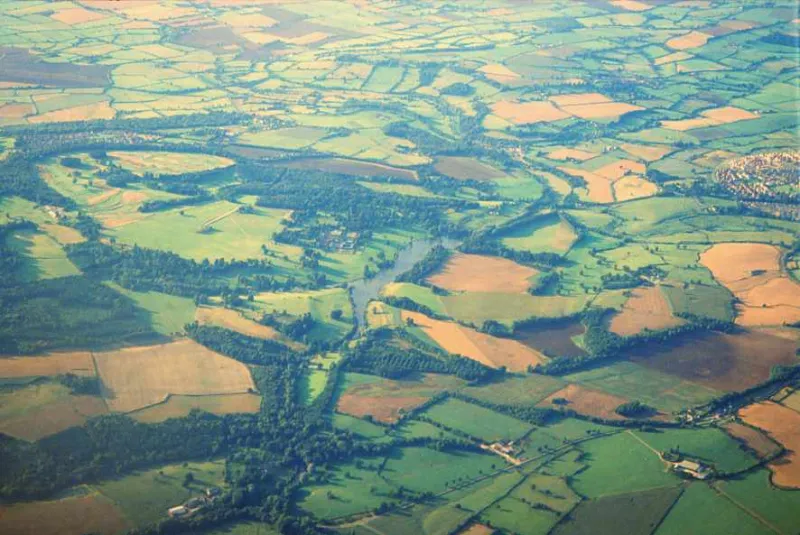
Photo: By Free-Photos from Pixabay, CC0, via Wikimedia Commons
A video call from the dock sounds like the ultimate lake-life flex. Then the upload bar stalls, your face freezes mid-sentence, and the client on the other end starts saying, “You’re breaking up.” That is the moment the fantasy meets the cove.
At Spillway Bridge, working from the lake is not a yes-or-no question. It is a property-by-property, carrier-by-carrier, hill-by-hill question. Some homes here handle a full workday without a hiccup. Others have a gorgeous view and a broadband situation that would make a 2010 office jealous. The difference is rarely the lake itself. It is the exact address, the tree canopy, the utility route, and how honest you are about what your job actually needs.
The brochure version versus the Tuesday version
The brochure version of remote work at the lake involves a laptop, a mug, and a dock. The Tuesday version involves a 9:15 standing meeting, a file that has to be uploaded by noon, and a thunderstorm rolling through right as you hit send.
Plenty of Spillway Bridge residents make it work. They run businesses, take calls, file reports, and ship projects from home. But they tend to have one thing in common: they tested the property before closing instead of trusting a provider’s coverage map. That map was drawn for billing, not for your basement office.
Internet: it is not one lake, it is a patchwork
Broadband around Spillway Bridge is less like a blanket and more like a quilt. Cable may run along a main road and stop two driveways before yours. Fiber might be available in one pocket and not the next. Older DSL lines still serve some homes. Fixed wireless can be excellent with clear line of sight and frustrating behind a ridge. Satellite reaches nearly everywhere but comes with latency and weather sensitivity that matter more for some jobs than others.
The first question is not “Is there internet?” It is “What internet is actually installed at this exact address, and can it be transferred or upgraded?” A neighboring parcel is not proof. A zip code is not proof. Even a street name is not proof. You want the physical address checked with the provider, ideally in writing.
Upload speed deserves special attention. Lots of lake buyers obsess over download speed because that is what streaming and browsing use. Remote workers often need the opposite. Large files, video calls, cloud backups, and screen sharing all lean on upload. A connection that streams movies beautifully can still choke on a presentation.
Ask the seller for a recent bill and a speed test screenshot. Better yet, ask to run your own test at the property on a weekday morning, not a quiet Sunday afternoon. Test near the spot where you would actually work. Wi-Fi does not care that the view is better on the porch if the router is in a metal cabinet across the house.
Cell service: the hill giveth, the cove taketh away
Cell coverage at Spillway Bridge is a local legend for a reason. One carrier can be strong on the ridge and useless down by the water. Another might surprise you in a hollow where the trees open up. Bars on your phone are a rough guide at best, and they can change when leaves come in or when a storm rolls through.
Do not test coverage from the driveway and call it done. Walk the property. Stand where your desk would go. Try a call from the kitchen, the main bedroom, and the dock. If you plan to use a hotspot as a backup, test that too, because a phone that handles calls may still struggle with a video meeting.
Wi-Fi calling helps in some homes, but it depends on the internet connection working. A cell booster can help in others, but it needs a usable outside signal to amplify. If your job involves being reachable for emergencies, treat cell coverage as part of the infrastructure, not an afterthought.
Power: the blink you learn to live with
Rural lake lines run through trees, wind, and weather. A blink during a storm is not unusual. Longer outages happen too, especially when ice or a downed limb takes out a feeder line. For a household that watches movies, that is an inconvenience. For a remote worker on a deadline, it is a problem.
A basic UPS can keep your router and modem alive long enough to finish a call or shut down cleanly. A whole-home generator is a bigger investment, and it needs to be sized and installed correctly. A portable generator can work, but only if you understand the hookup, the fuel, and the safety rules. Do not assume the previous owner’s generator comes with a transfer switch that matches your needs.
Surge protection matters here too. Lake country sees its share of lightning. Protect the equipment that keeps you employed.
The backup plan that actually works
Redundancy is the unglamorous secret. The remote workers who thrive at Spillway Bridge usually have a primary connection and a second option. That might be a hotspot on a different carrier, a satellite backup, or a nearby office or library they can use when the weather turns. They also tend to schedule big uploads for off-peak hours and keep their most important files in the cloud rather than on one laptop by the water.
A separate workspace helps more than people expect. A dedicated room with a wired connection or a strong mesh node beats a kitchen table where the signal fights the microwave. If the house has an outbuilding or a garage office, test the connection there before you fall in love with it.
A pre-closing connectivity checklist
- Ask the seller which internet provider serves the home and whether the account can be transferred.
- Run a speed test at the property on a weekday morning and again in the evening.
- Check upload speed, not just download.
- Walk the property with your phone and test calls in the rooms where you would work.
- Ask neighbors about outages, dead zones, and which carriers actually work.
- Confirm whether the home has a generator, transfer switch, or UPS, and whether it is included in the sale.
- Test cell hotspot speed if you plan to rely on it as backup.
- Look at the utility easement and tree cover along the line serving the house.
- Ask whether the current owner has ever lost power for more than a few hours.
The honest bottom line
Working from the lake is not a myth. It is a logistics question. If your job is flexible and your property has tested, redundant connectivity, Spillway Bridge can be a wonderful place to earn a living. If your job depends on rock-solid upload speed, constant availability, and no surprises, do the homework before you sign. The view will still be there after the speed test.