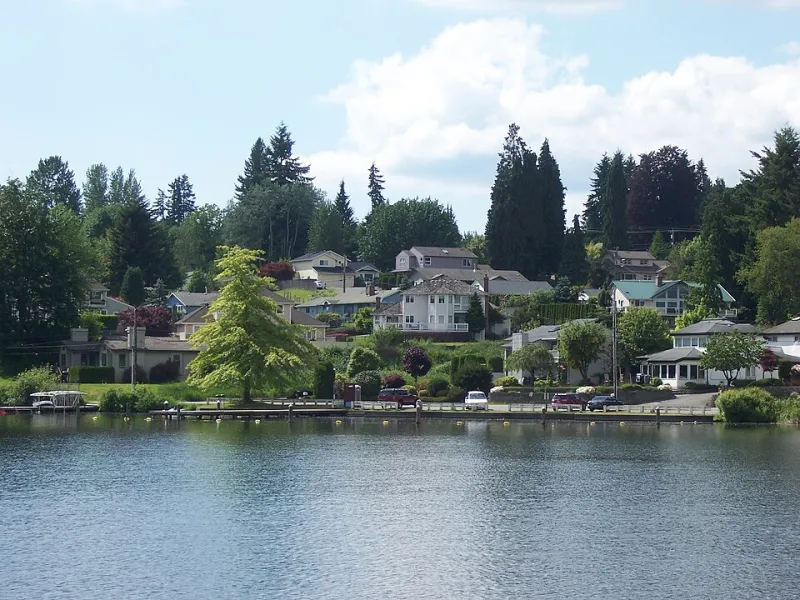
Across the Road From the Water: The True Cost of a Spillway Bridge Lake House Without a Dock

Photo by Photo by Gene Gallin on Unsplash on Unsplash
Plenty of buyers fall for a Spillway Bridge listing the same way: they walk onto the deck, see blue water through the trees, and start mentally parking a boat at the end of the yard. Then the listing agent gently explains that the waterfront is across the road, or that the cove belongs to the neighbors, or that the community ramp is a quarter mile back toward the entrance. The view is real. The access is a separate conversation.
That's not a reason to walk away. Some of the most sensible lake purchases around Spillway Bridge are non-waterfront homes with solid, clearly documented access. But "lake access" is one of those phrases that can mean almost anything. Before you sign, you need to know exactly how you'll get a kayak, a pontoon, or a pair of water skis from your driveway to the water — and what that privilege costs in money, time, and paperwork.
The View Is Not the Access
Start by separating three things that often get blended together in a listing: waterfront, water view, and water access. A waterfront home usually includes some form of shoreline rights, though even that can get complicated. A water-view home may have no legal path to the lake at all. Water access can be deeded, leased, shared, seasonal, or granted by a community association — and each version behaves differently when you try to use it, insure it, or sell it.
If the house sits across the road from the lake, ask for the actual access document. Not a verbal description, not a highlighted line on a plat map, not a neighbor's assurance that "everybody uses the path by the mailbox." You want the deed language, the easement, the association rules, or the marina lease. If the seller can't produce it, that's not a closing detail. That's the whole point.
Deeded Access: Read the Language, Not the Brochure
A deeded access easement can be excellent. It can also be narrow, steep, unpaved, or limited to certain uses. One Spillway Bridge property might have a recorded right to use a shared path and dock area. Another might have a deeded walking easement only — no boat launch, no trailer parking, no dock tie-up.
Look for words like "ingress and egress," "boat ramp," "dock," "parking," and "maintenance." Then ask who pays to maintain the access. Shared paths and private ramps don't repair themselves. If a handful of neighbors share a gravel lane to the water, there should be a maintenance agreement or at least a clear history of how the cost gets split. A $250 annual share is a different animal than an open-ended special assessment.
Also confirm whether the access transfers with the property. Most recorded easements do, but exceptions exist. A local real estate attorney who knows lake deeds is worth the fee here. This is exactly the kind of thing that looks fine at closing and turns into a headache the first time a new neighbor decides the path is private.
Community Ramps and the Morning Parking Lot
For many non-waterfront owners, a community boat ramp is the workhorse of lake life. It's also where fantasy and reality meet. A ramp that looks charming on a Tuesday afternoon can be a bottleneck on a July Saturday, with trailers queued, trucks parked in the wrong spot, and somebody's cooler blocking the turn-around.
Ask practical questions. Is the ramp open to all property owners or only association members? Is there a key, code, or sticker? Are trailers allowed to park overnight, or must they be stored off-site? What's the launch fee, if any, and does it change by season? Are there hours of operation, and is the ramp usable when the lake level drops?
Don't forget the trailer problem. A boat on a trailer needs a home. Some subdivisions prohibit trailer storage in driveways. Some allow it only behind the house. Some have a shared storage lot with a waiting list. If you're buying a house without a dock, the trailer logistics can quietly add hundreds of dollars a year and a fair amount of daily aggravation.
Marina Slips: Convenience With a Lease Attached
A marina slip is often the simplest path to worry-free water time. You drive to the marina, walk down the dock, and go. No ramp drama, no trailer shuffle. The trade-off is cost and availability. Slips around Spillway Bridge vary by size, location, amenities, and season, and the waitlist can be longer than you'd expect for a popular lake.
Read the slip lease carefully. Is it annual or seasonal? Does it transfer if you sell the house? Can you sublet it? What happens if the marina changes ownership or reconfigures docks? Is insurance required, and does your homeowner's policy cover personal property at the marina? A slip can be a wonderful convenience, but it's a recurring expense — not a permanent right attached to your deed unless the paperwork specifically says so.
The Hidden Cost Column: Time, Fees, and Storage
Non-waterfront lake living rarely fails because of one giant cost. It fails because of a stack of small ones. Launch fees. Marina rent. Trailer registration and storage. Gas to haul the boat to the ramp. A golf cart or utility vehicle if the access path is long. Extra insurance riders for boats and docks you may not own. And the biggest cost of all: time.
A five-minute walk to a shared dock is a different lifestyle than a fifteen-minute drive, a launch line, and a parking shuffle every time somebody wants to swim. Neither is wrong. But be honest about which one you're buying. Spend a Saturday morning at the ramp before you make an offer. Watch how owners actually use it. Talk to a neighbor. The lake has a way of revealing its routines.
Insurance and Resale: What a Non-Waterfront Address Changes
Insurance companies care about water — sometimes more than buyers expect. A home with a water view but no dock may qualify for different rates than a true waterfront property, but the details depend on flood zones, elevation, and how the access is structured. If you have a shared dock or a deeded easement, tell your agent. Don't assume coverage follows the view.
Resale matters too. When you sell, the next buyer will ask the same questions you're asking now. A clean, documented access arrangement is a selling point. A vague one is a discount. Keep the paperwork together: the easement, the association rules, the ramp agreement, the marina lease, and any maintenance records. If you improve the access — clearing a path, adding a small dock where allowed, updating a shared agreement — document that as well.
A Practical Access Audit Before You Make an Offer
Before you fall for the view, run a simple audit. Get the access document in writing. Confirm the ramp or dock is usable for the kind of boat you own. Price the annual fees, not just the monthly ones. Check trailer storage rules. Ask about waitlists and seasonal closures. Call your insurance agent. And talk to at least one owner who actually uses the access in summer.
A Spillway Bridge lake house without a dock can be a smart buy — often a more affordable one. But the water has to be reachable in a way that fits your real life, not just your weekend imagination. The view is what you see from the deck. The access is what you live with every Saturday.