Three Cabins, Three Second Chances: The Neighbors Who Moved to the Lake Full-Time
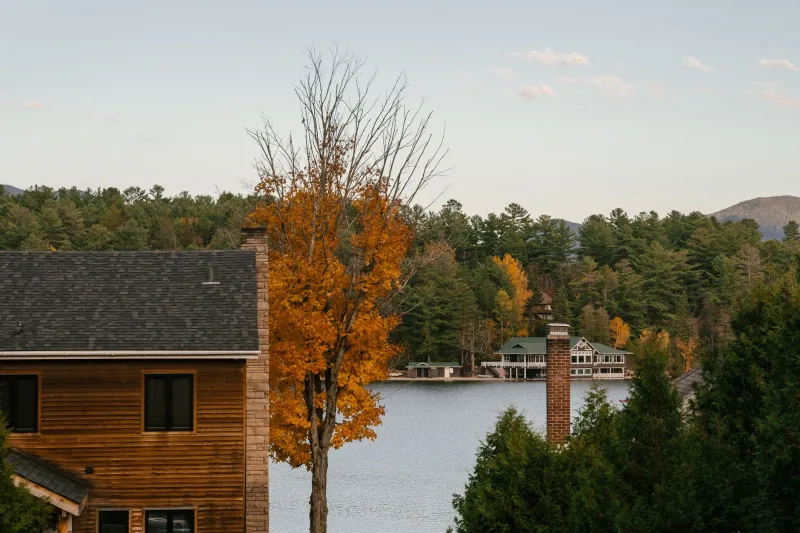
Drive the back roads around the lake in February and you'll notice something: lights on. Not just the porch lights on timers at the seasonal places, but kitchen lights at 7 a.m., snow boots on the mat, a kid's bike chained to the railing. Year-round living at the lake used to be rare around here. Not anymore.
We sat down with three households who bought tired, weekend-only fishing cabins and made the leap to full-time. Their stories are different. Their advice is not.
The Hendersons: A $38,000 Cabin and a $60,000 Lesson
Dana and Mike Henderson found their place almost by accident — a two-bedroom fishing cabin listed for $38,000, the kind of price that makes you stop scrolling. "It had a tarp on the roof and a raccoon in the crawlspace," Dana laughs. "But the lot was the thing. You can fix a cabin. You can't fix a bad lot."
What they couldn't fully fix, it turned out, was the septic. The original system was a sand filter from the seventies, and the county required a full replacement before they could pull permits for anything else. Between the septic, a new well line, and bringing the electrical panel up to code, the "little weekend project" became a two-year, $60,000 journey.
Their advice: "Get the septic scoped and permitted before you fall in love. Ask us how we know."
Ray and Terrence: Retiring to the Water, One Permit at a Time
Ray and Terrence came down from Charlotte with a retirement timeline and a spreadsheet. Their cottage — a knotty-pine number built as a summer fishing camp in 1968 — had good bones and no insulation to speak of.
The surprise wasn't the renovation. It was the paperwork. "Shoreline rules, setback rules, a variance for the deck," Ray says. "We probably spent four months just learning who signs what." Their tip for anyone eyeing an older cabin: visit the county permitting office in person, early, with coffee. "The folks there will tell you things no website will."
The finished home kept its pine walls but gained spray foam insulation, a heat pump, and a screened porch that gets used in every month of the year. "Best decision we made," Terrence says, "was keeping the cabin's soul and just making it warm."
The Alvarez Family: Trading Commute for Casting
For the Alvarezes, the move was about time. Marisol worked remote since 2020; her husband Joel negotiated a hybrid schedule. Their cabin — a 1970s two-bedroom with paneling the color of butterscotch — cost less than their townhouse parking spot.
The headaches were real: a crawl space that flooded every spring until they regraded the lot, and a well that needed a new pump two weeks after closing. But the before-and-after math they care about looks different. "We used to see the lake two weekends a month," Marisol says. "Now my kids see it every morning on the way to the bus."
What They'd Tell You
Ask all three what they wish they'd known, and the answers rhyme:
- Budget 30–50% over the purchase price for systems work — septic, well, HVAC, insulation. Old cabins are charming because nobody updated them.
- Permits come before dreams. Shoreline and setback rules shape everything, and they vary by lot.
- Winter is the reveal. Visit a property in the off-season before committing. If it holds up in February, it'll be glorious in June.
- The community is the upgrade. Every one of them mentioned neighbors who loaned tools, shared contractor names, or showed up with soup during reno week.
The cabins they bought were never really the point. The water was. The quiet was. The life was. The cabins just needed somebody stubborn enough to stay through the mess and make it home.