Whose Tree Is It Anyway? Sorting Out Shade, Sap, and Liability With the Neighbor Next Door
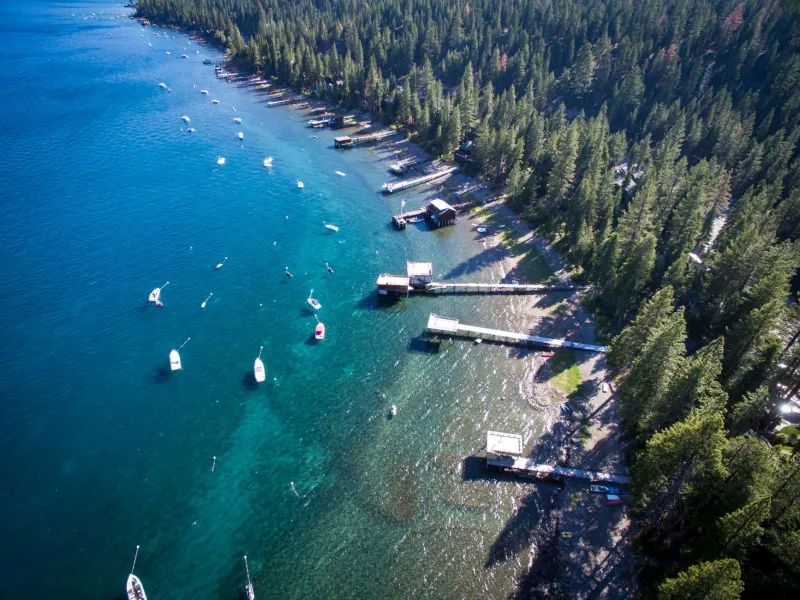
There's a reason tree talk comes up in almost every lake transaction I hear about. On the water, the tree line isn't just landscaping. It's shade over a dock, a screen between you and the neighbor's deck, a windbreak, a view blocker, and — after every summer storm rolls through — a pile of debris that somebody has to deal with.
So let's walk through how this actually works in North Carolina, with plenty of local color and none of the mudslinging. Consider it a field guide to the conversations worth having long before anyone reaches for a chain saw.
Start With the Line, Not the Limb
Before you can settle who's responsible for a tree, you have to know where it's growing. Sounds obvious. It almost never is. Lake lots here were platted in different decades with different survey standards, and a shoreline that's shifted over forty years doesn't always match the line on the deed.
If a trunk sits squarely inside one parcel, it belongs to that landowner — full stop. If it sits right on the dividing line, it's often treated as a boundary tree, which generally means shared ownership and shared obligation. Those situations get interesting fast, because neither owner can usually do much to a shared tree without the other's agreement.
If you're buying, this is worth nailing down before closing. Ask the seller for the most recent survey. If there isn't one, order one. A few hundred dollars on the front end beats a years-long disagreement with a neighbor you haven't even met yet.
The Living Tree Rule, In Plain English
Here's the piece most folks have backwards. In North Carolina, a healthy tree that falls on its own is generally considered an act of God. The owner isn't automatically on the hook for the dent it leaves in your gutter or the branch it drops on your dock. That's true even if the tree was technically theirs.
What changes the math is knowledge. If a landowner knew — or reasonably should have known — that a tree was dead, diseased, or structurally compromised and did nothing about it, that's a different conversation. That's negligence territory, and it's where liability can attach.
The takeaway is simple and slightly annoying: the law rewards documentation. More on that below.
Trimming: What You Can and Can't Do
This is the question I get most often, usually phrased as "can I just cut it back?"
In general, a property owner in North Carolina may trim branches and roots that cross onto their side of the property line. That's a self-help right, and you don't need permission to use it. But four caveats do the heavy lifting:
- You can't cross the line. Trimming has to happen from your own property, or with your neighbor's explicit consent. No climbing their ladder, no walking their yard, no reaching over the fence with a pole saw and hoping nobody notices.
- You can't kill the tree. If your trimming is aggressive enough to harm the tree's health, you may have crossed from exercising a right into causing damage — and North Carolina's timber trespass statute takes cutting someone else's trees seriously. Treble damages exist for a reason.
- You can't turn a view easement into a fantasy. If you don't have a recorded view easement or a subdivision covenant that specifically addresses tree heights, you generally don't have a legal right to your neighbor's trees being shorter.
- You probably shouldn't hire it out sight unseen. A certified arborist can tell you what's safe to cut and what will kill a mature oak. That opinion is worth more than the invoice.
Also worth mentioning: the mess. Trimming generates debris, and the debris belongs to whoever generated it. Flinging cut branches back over the line is a great way to turn a routine chore into a genuine dispute.
When a Limb Meets a Dock
Docks are the part of lake living where tree trouble gets expensive. A large limb dropping on a boat lift, a pontoon cover, or the walkway can run into real money, and it's the moment people start looking for someone to bill.
Practically speaking, your homeowner's policy is usually the first stop, not your neighbor's. Most policies will cover removal of a fallen tree or limb from your own structure and property, typically subject to a per-event cap. The neighbor's policy generally isn't in play unless negligence is established — and insurers are rarely eager to chase a neighbor over a limb.
One local wrinkle: check whether your dock and boat lift are scheduled on your policy or riding on a separate endorsement. Plenty of lakefront owners discover at claim time that the structure they care most about was covered at a lower limit than they assumed.
Danger Trees: The Paper Trail That Protects Everyone
If you're worried about a specific tree, the single most useful thing you can do is create a record. Not a passive-aggressive one — a boring, factual one.
Get a written assessment from a licensed arborist. Photograph the tree from your side of the line. Send your neighbor a short, friendly letter or email noting the concern, attaching the assessment, and asking whether they'd be willing to look at it together. Keep a copy.
That letter does two things. It gives your neighbor a fair chance to act, which is the decent move. And if the tree comes down later, it removes any claim that nobody knew. In legal terms, it's the difference between an act of God and an act of neglect.
The Conversation Before the Chain Saw
Most of these situations are settled over a fence, not in a courtroom — and that's a good thing, because litigation is slow, expensive, and a genuinely miserable way to live next door to somebody at the lake.
A few things that help:
- Lead with what you want, not what they did wrong. "I'm worried about that pine over my boat lift" lands better than "your tree is a hazard."
- Offer to split the cost of an arborist. It's a small expense and it reframes the conversation as shared problem-solving.
- Ask before assuming. Sometimes the neighbor has been meaning to deal with that tree for two years and just needed someone to say it out loud.
- Put agreements in writing, even casually. A text confirming "we agreed to split the removal, I'll schedule it" is worth keeping.
And if it's already tense? A short letter from an attorney is often enough to reset the tone — and it's cheaper than the alternative. It's also worth a call to your county extension office or the NC Forest Service, both of which field these questions regularly and can point you toward resources.
The Short Version
Your neighbor's healthy tree is generally their tree and their shade, and it's usually their call. You can trim what crosses onto your side, carefully. You can't demand a view you don't have a legal right to. And when a tree is genuinely hazardous, the person who documented it early is in a far better position than the person who complained about it for a decade and never wrote anything down.
None of this replaces a conversation with a North Carolina real estate attorney — every lot, deed, and covenant is a little different, and lake properties tend to have more quirks than most. But it should make that first conversation with the neighbor a whole lot easier to start.
And honestly, at the lake, that's usually the whole ballgame.